
Packaging lines don’t pause for SKU changes, seasonal surges, or the next retail mandate. The pressure to move faster, run safer, and do it with fewer people on the floor isn’t a future state, it’s the operating reality most production managers are already navigating.
The answer isn’t to run harder on a model that’s already under strain. It’s to engineer around it.
Since 1987, Brenton Engineering has built case packing and palletizing systems for exactly this environment. Below are two examples of equipment commonly used in household products applications: the M2000 Side Load Case Packer and the RP1000 Robotic Palletizer.
When your SKU Range Is A Challenge
M2000 Side Load Case Packer
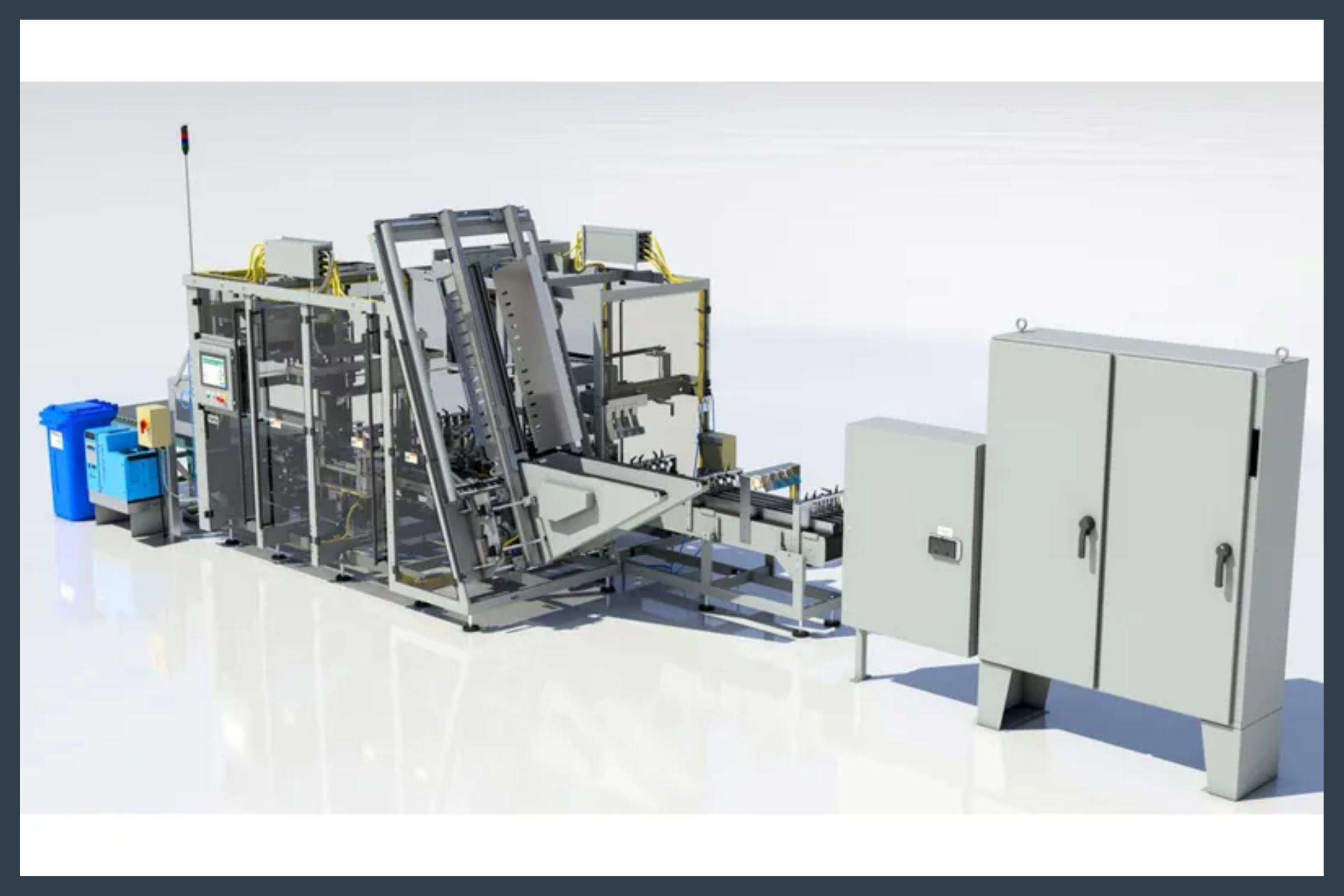
Laundry pods, cleaning cartons, personal care tubs. Household lines run a wide range of formats, and changing over for each one costs time your throughput targets don’t have.
The M2000 was designed around that reality. It’s an intermittent motion side load case packer built for lines where changeover repeatability matters as much as speed. Operators follow a defined process rather than troubleshoot a new one every time a format changes.
Compared to the Mach 2 it replaced, the M2000 cuts footprint by 25% and shortens installation time without compromising the mechanical precision the Mach 2 was known for. It runs RSC cases, trays, and display cases across a wide format range, up to 35 cases per minute standard.
See the M2000 in action: ▶ Watch: M2000 Side Load Case Packer
For capital equipment buyers, the M2000 integrates directly into a full end-of-line system: erector, packer, sealer, palletizer, all built and FAT-tested as a single system at Brenton’s Alexandria, MN facility before it ships.
When Pallet Quality and Floor Safety Both Matter
RP100 Robotic Palletizer
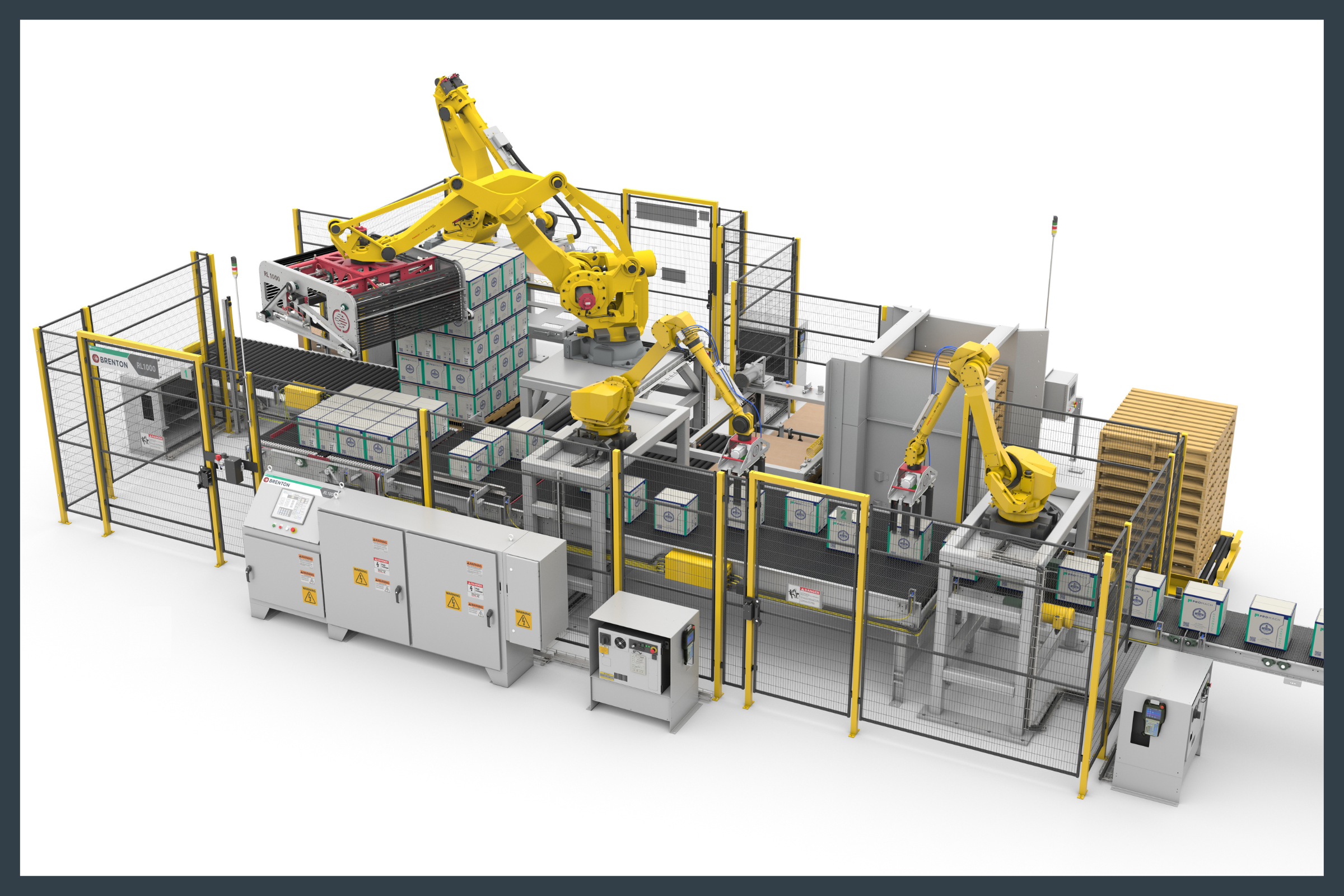
The last step before a load ships shouldn’t be the most physically demanding job on your floor. For household manufacturers managing complex retail pack patterns and ergonomic improvement targets, the RP1000 addresses both at once.
Built on FANUC robotics, the RP1000 handles single and multi-line feeding with multiple discharge lane configurations. End-of-arm tooling is specified to your application: multi-zoned vacuum, clamp-style, or bag grippers. Mixed layer palletizing is supported when your retail requirements call for it. Changeover between case sizes requires little to no operator adjustment.
Safety is designed in, not bolted on: wire mesh fencing, polycarbonate enclosures, and safety-rated light curtains at pallet discharge.
See the RP1000 in action: ▶ Watch: RP1000 Robotic Palletizer
One System. One FAT. One Point of Accountability.
The M2000 and RP1000 aren’t just sold independently. They can be engineered to work together as part of a fully integrated end-of-line system.
When your capital investment requires a single point of accountability from contract through commissioning, Brenton operates as a true integration partner. Every system is designed, built, and fully tested at one facility in Alexandria, MN. Your FAT reflects real production conditions, not a promise made on paper.
If you’re evaluating end-of-line automation for a household products line, the conversation starts with your throughput targets, your SKU range, and your floor constraints.
Connect with a Brenton regional sales manager →
Speed. Flexibility. Reliability at Scale.